


The Belongside Families website is not compatible with Internet Explorer. Please use a modern browser such as Chrome, Firefox, Edge, or Safari for the best experience.
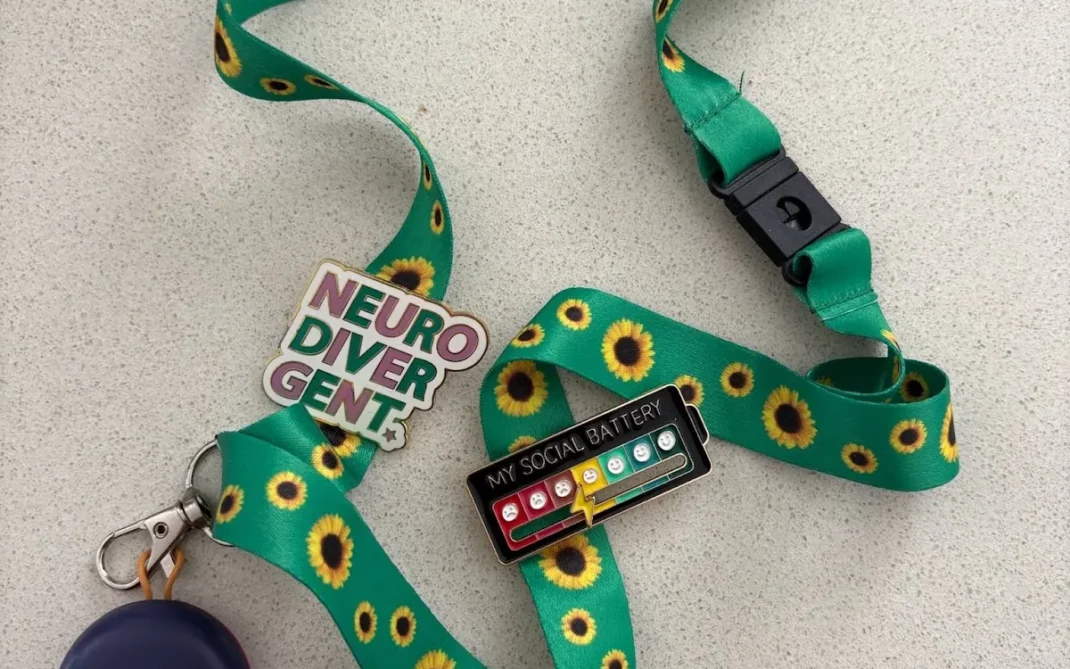
I bumped into a former client recently. Someone I coached years ago. We exchanged updates, where we’re at now, what’s changed. When I told him about Understanding Zoe (my new Startup helping parents navigate the overwhelm with raising neurodivergent children) and that both Zoe (my daughter) and I are autistic, he paused.
Then came the familiar response: “Really? Are you sure? I would’ve never guessed.”
It hit like a script I’ve heard far too many times. Always delivered with surprise. Often followed by something like, “But you don’t look autistic.”
At this point, it’s hard to count how often I’ve heard that phrase. Sometimes it’s said with curiosity. Other times, dismissal. But it always lands the same: as a quiet judgement that somehow, I must be mistaken. Or exaggerating. Or lying.
This is what ableism often looks like in everyday conversation.
When someone says “you don’t look autistic”, what they’re really saying is: you don’t match the image I’ve been told autism looks like.
This reveals a deep societal bias, one that assumes disability must be visible, obvious, or accompanied by struggle at all times. It completely ignores the reality of masking, the nuances of neurodivergence, and the fact that diagnosis, for many of us, comes after years of adapting to environments that weren’t built for us.
I didn’t even realise I was autistic until later in life. I have always felt misunderstood, but never knew why. I had executive functioning challenges. Sensory overload. I’d hyperfocus for days, then burn out hard. But I powered through. That was the culture.
Now I know better. I understand myself better. I honour my lived experience. And I also have the assessments, the reports, the clinical backing to go with it. But even if I didn’t, it would still be valid. I deeply know that self-identification is as valid as a formal assessment (which is actually now proven by research).
The truth is: autism doesn’t look one way.
Disability doesn’t look one way.
And you don’t get to opt in or out of believing someone just because it challenges your idea of what’s being autistic, neurodivergent or neurotypical!
So, what can we learn from this?
The first thing: Disability is not a bad word.
It isn’t something to be ashamed of, or something to apologise for. It’s a part of who we are. And it deserves the same respect and recognition as any other identity.
Here’s the real issue… society isn’t built with us in mind. And that’s where the harm lives. Not in our neurodivergence, but in how we’re treated when we name it.
That’s why I resonate so deeply with the social model of disability, which says: we’re not disabled by our minds or bodies. We’re disabled by the barriers in our environments, by poor design, outdated assumptions, and the refusal to adapt.
I see this in so many spaces:
- The conference that offered no low-sensory room and left me bedridden for a week
- The airport lounge that denied a quiet space because I “wasn’t a member”
- The client, well-meaning but dismissive, who needed to question my identity the moment I shared it
When we centre neurotypical experience as default, everything else becomes ‘disabled.’ That’s what needs to shift.
What would inclusion really look like?
Inclusion isn’t about saying the right thing or pretending to be impressed. It’s about:
- Listening without questioning
- Believing someone the first time
- Asking, “How can I support you?” instead of “Are you sure?”
- Understanding that invisible doesn’t mean imaginary
It would be radical if, when someone said, “I’m autistic,” the response was just: “Thanks for sharing. What do you need?”
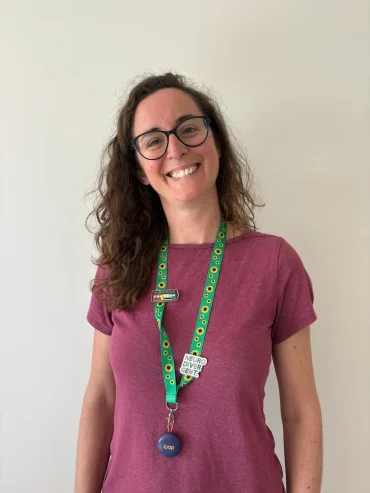 About Laetitia
Laetitia Andrac is an Autistic mother, bestselling author and co-founder of Understanding Zoe. Drawing on her own experience raising a neurodivergent child, Laetitia created Understanding Zoe with her partner after struggling to bring together information from different professionals supporting their daughter. What started as a way to help their own family has grown into an AI-powered app that helps neurodivergent people, families and professionals better understand individual needs and work together to provide support.
This article was originally published on Laetitia Andrac’s Substack. You can read more of Laetitia’s writing about Autism, disability and her lived experiences there.
Free 30-day trial of Understanding Zoe for the Belongside Community
Understanding Zoe is an app that helps parents and carers keep their child's information in one place, make sense of reports and share important information with the people supporting their child. As part of our partnership with Understanding Zoe, families in the Belongside Community can try the app free for 30 days using the code BELONGSIDE30.